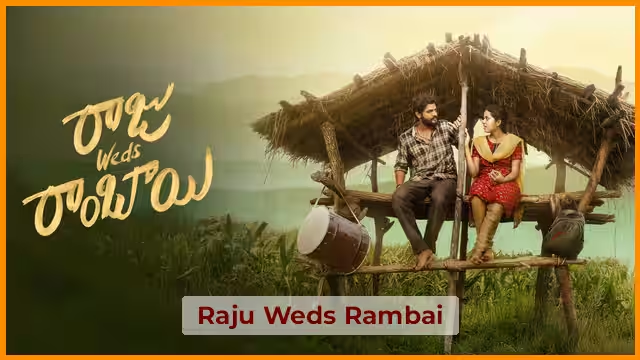
Raju Weds Rambai Review – A Rustic Romance That Puts Village Honor on Trial
1. Movie Summary & Story
Set against the dusty lanes and open fields of a typical Andhra village, Raju Weds Rambai follows the love story of two ordinary youngsters whose lives are dictated by the expectations of their community. Raju (played by Akhil Raj Uddemari) is a carefree drummer who spends his days humming folk tunes and helping his friends with small gigs. Rambai (Tejaswi Rao), the daughter of the government hospital’s compounder, is a modest girl whose world revolves around family duties and the modest comforts of village life.
When the two meet at a local fest, an innocent attraction quickly deepens into a full‑blown romance. Their affection, however, clashes with a long‑standing village norm: Rambai’s father dreams of seeing his daughter wed a man with a secure government job, a status symbol for respectability in their world. The budding relationship becomes the talk of the hamlet, sparking gossip, jealousy, and a series of confrontations that push both protagonists to question their own values.
The narrative shifts from light‑hearted courtship to a more serious examination of honor, social pressure, and personal choice. As the couple’s families and neighbours weigh in, the stakes rise—Raju’s lack of a “respectable” career threatens not only his love but also his standing in the community. The climax delivers a gut‑wrenching twist that forces the audience to reconsider the price of defying tradition. While the plot follows familiar beats, the film’s attempt to portray the raw, unvarnished reality of rural social dynamics gives it an earnest edge that lingers beyond the credits.
2. Cast & Crew Table
| Role | Name |
|---|---|
| Director / Writer | Saailu Kaampati |
| Lead Actor (Raju) | Akhil Raj Uddemari |
| Lead Actress (Rambai) | Tejaswi Rao |
| Supporting Actors | Chaitanya Jonnalagadda, Shivaji Raja, Anitha Chowdary, others |
| Music Composer | Suresh Bobbili |
| Cinematographer | Wajid Baig |
| Editor | Naresh Adupa |
| Producers | Venu Udugula, Rahul Mopidevi |
3. Technical Aspects
Cinematography – Wajid Baig captures the village’s earthy palette with a steady hand. Sun‑baked fields, narrow alleys, and the bustling market square are framed in a way that feels almost documentary‑like, allowing the audience to breathe the same air as the characters. The occasional use of handheld shots during heated village meetings adds a sense of immediacy, while wider landscape shots underscore the isolation felt by the lovers.
Music & Background Score – Composer Suresh Bobbili weaves folk‑inspired melodies with contemporary arrangements. The romantic duets are simple yet memorable, echoing the innocence of Raju and Rambai’s early encounters. In the latter half, the score turns darker, employing low‑drone strings and subtle percussions that amplify the tension as societal pressure mounts. The music never feels intrusive; instead, it acts as an emotional undercurrent that guides the viewer through both the joyous and the tragic moments.
Editing & Pacing – Naresh Adupa’s editing works well in the first act, where the narrative moves briskly from meeting to courtship. However, once the story enters the conflict zone, several scenes linger longer than necessary, causing the momentum to dip. A few repetitive confrontations could have been trimmed, which would have tightened the overall flow and kept the audience more engaged.
4. Performances & Characters
Akhil Raj Uddemari (Raju) – As a newcomer, Akhil delivers a convincingly rustic performance. His body language—slouched shoulders, easy smile, and the occasional clumsy stumble—makes Raju feel like someone you might actually meet on a village road. He manages to convey both the carefree joy of a drummer and the quiet desperation of a man fighting for love against entrenched norms.
Tejaswi Rao (Rambai) – Tejaswi brings a subtle strength to Rambai. Her eyes often betray a mix of longing and fear, especially in scenes where she confronts her father’s expectations. The actress avoids melodrama, opting instead for restrained expressions that keep the character grounded.
Supporting Cast – Shivaji Raja, playing the stern yet caring father, provides the moral compass that drives much of the conflict. His occasional softening moments add depth to an otherwise archetypal role. Chaitanya Jonnalagadda’s comic relief, though sporadic, offers brief respite from the heavy drama. Anitha Chowdary and other village elders contribute realistic background texture, though a few sub‑plots involving them feel under‑developed.
Overall, the ensemble leans on sincerity rather than star power, and that honesty carries the film through its uneven moments.
5. Box Office & Collection
| Day | Net Collection (India) |
|---|---|
| 1 | ₹ 1.15 crore |
| 2 | ₹ 2.15 crore |
| 3 | ₹ 2.50 crore |
| 5 | ₹ 8.45 crore |
| 6 | ₹ 9.40 crore |
The film opened with a respectable ₹ 1.15 crore, a solid figure for a modestly budgeted rural drama. Strong word‑of‑mouth propelled the second‑day earnings to over ₹ 2 crore, and by the end of the first weekend the movie had amassed more than ₹ 8 crore, effectively covering its production costs. By the sixth day it crossed the ₹ 9 crore mark, outperforming many contemporaries with bigger star casts. The numbers suggest that audiences are still hungry for grounded, small‑town stories that reflect their own lives.
6. What Works & What Doesn’t
What works
- Authentic village backdrop that feels lived‑in.
- Genuine chemistry between Akhil and Tejaswi, making the romance believable.
- Suresh Bobbili’s music, especially the love themes, which heighten emotional stakes.
- A climax that refuses to tie everything up neatly, leaving a lingering moral question.
What doesn’t
- Second‑half pacing drags; several scenes could have been trimmed.
- Certain emotional turns feel forced, making the heroine’s sudden decisions appear abrupt.
- The story leans on familiar tropes—disapproving father, status‑driven marriage—reducing surprise factor.
- For viewers expecting a light‑hearted romance, the darker ending may feel unexpectedly heavy.
7. My Rating & Final Verdict
Rating: ★★★☆☆ (3 out of 5)
Raju Weds Rambai is not a groundbreaking masterpiece, but it succeeds where many low‑budget films stumble: it tells a story with heart. The rustic setting, earnest performances, and a soundtrack that knows when to swell or recede give the film a solid foundation. Its main shortcomings lie in a sluggish second act and occasional narrative predictability.
If you appreciate cinema that mirrors the everyday struggles of rural India and are willing to overlook a few pacing hiccups, this movie is worth a sit‑through. It may not leave you with a sugar‑coated aftertaste, but it will certainly spark conversations about love, honor, and the price of defying tradition.
Disclaimer: This review reflects personal opinion based on publicly available information and the reviewer’s own viewing experience. All movies should be enjoyed through legal channels.